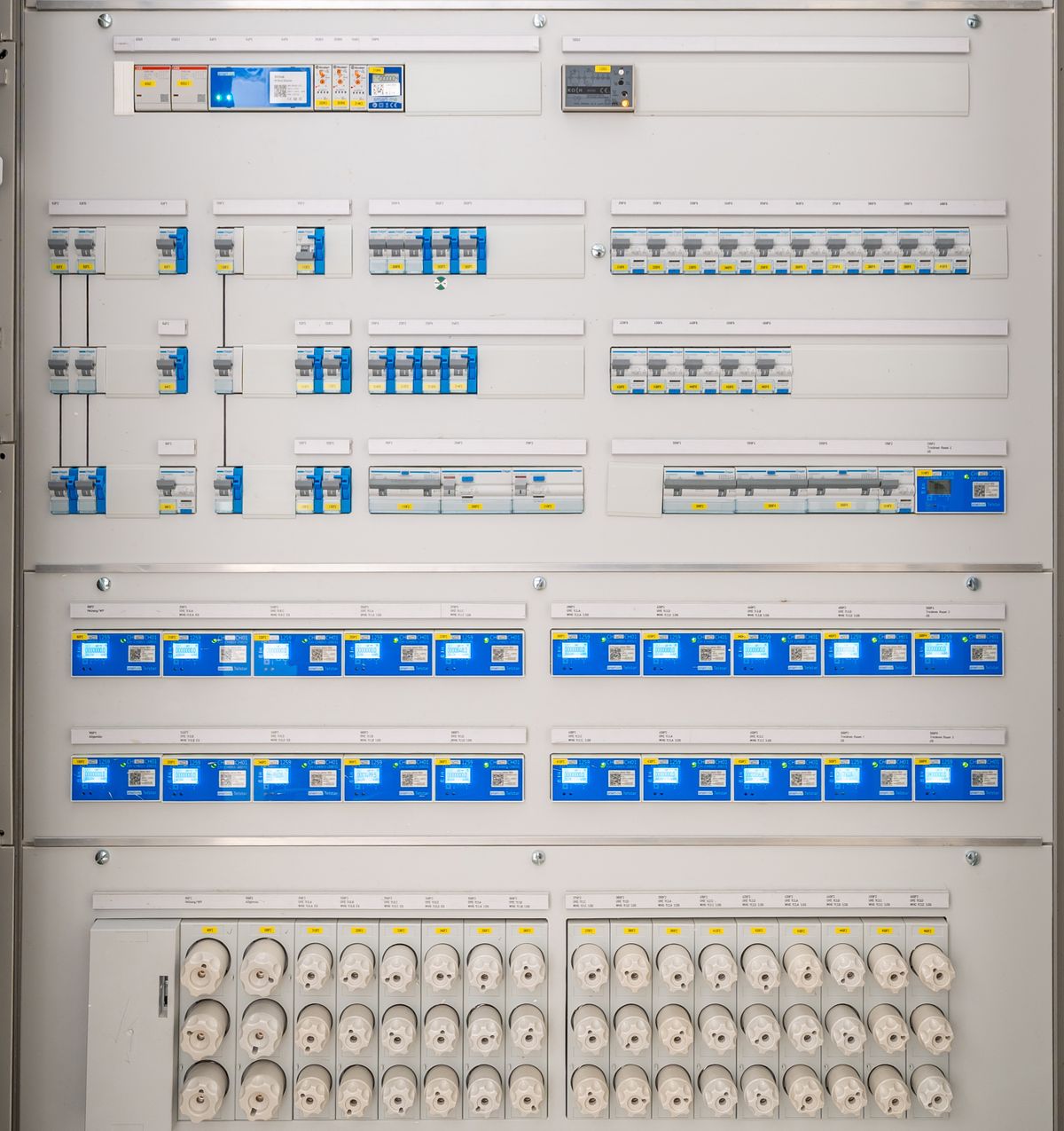
1. Clarify what the customer wants replaced
A customer may request a new board for very different reasons: damaged equipment, refurbishment, an extension, additional appliances or a wish to understand an ageing installation. Record the reason, the symptoms reported and the expected outcome. Distinguish replacement of the enclosure, changes to protective devices and wider work on the circuits. Avoid an ambiguous line such as “complete compliance upgrade” unless you are actually pricing the entire corresponding scope.
Collect the address, the use of the premises, who can authorise access and decisions, and any work planned by other businesses. Ask for available plans, previous reports and product references. These documents help prepare the survey; they do not prove that the present installation still matches the drawing. Future vehicle charging or a heat pump should be recorded as a requirement to assess, without improvised sizing over the telephone.
2. Arrange a survey that can be carried out safely
Plan an appropriate visit with a competent person. Accessible observations, documents and information from the customer can help prepare the work, but do not replace the necessary technical checks. Never ask the customer to open the board, touch a conductor or perform a test to speed up the quotation. A useful external photograph should only be taken where conditions allow, without exposing anyone to danger.
The British HSE explains that electrical work requires appropriate competence and safe organisation. This supports allowing time for preparation, without turning this guide into a technical procedure or treating British regulations as universal. The responsible professional must check the qualifications, methods, applicable standards and arrangements with the network operator in the country where the work takes place.
HSE — Work on electrical equipment, machinery or installations
3. Separate observed facts from matters to confirm
Divide the survey record into three columns: observed, documented and to be checked. Record the location, available space, access, visible identification and known information about how the installation is used. Note the circuits and equipment identified without automatically inferring their condition from a label. Keep relevant photographs with the customer's agreement, avoiding private documents and unnecessary information.
Identify uncertainties that change the price: an unidentified circuit, an inaccessible route, a surface requiring repairs, work to coordinate with the network operator or a fault requiring assessment. Give each uncertainty an action, an owner and a decision point. If an additional investigation needs to be a separate service, describe it and agree its terms. An incomplete assessment must not become an unlimited promise to repair everything for a fixed sum.
4. Build a materials list around the project
After the necessary technical assessment, group the planned references: the distribution assembly, components selected by the professional, compatible accessories, identification, fixings and consumables. Check quantities, chosen specifications, manufacturer-stated compatibility and availability. Spare space in an enclosure does not justify promising that future equipment can be connected without further assessment.
Keep the supplier quotation and its date. Add delivery or procurement costs genuinely attributable to the job. Identify products still awaiting confirmation and how a substitution will be approved. Do not quietly replace a reference with another because it looks similar. The customer should be able to understand what will be supplied; the engineering detail belongs in the appropriate professional records.
5. Count all the time involved
Break the workload down into preparation, procurement, travel, protecting the work area, the work itself, checks, identification, cleaning and handing over the agreed documents. Separate elapsed time from labour hours: two people working for four hours represent eight person-hours. How long the premises or electricity supply will be unavailable is a further matter to organise with the customer.
Ask which uses are particularly affected by an interruption: business activity, access systems, refrigeration or other declared needs. Agree an appropriate arrangement without promising continuity that has not been assessed. Dealings with third parties, extra visits and foreseeable waiting time should be identified. Do not add a journey twice if it is already included in your internal allowance.
6. A costing example, not a market rate
Fictional example in neutral currency units, before applicable taxes: materials and consumables 620; ten person-hours at an internal cost of 35, making 350; travel and procurement 70; job costs not already allocated 60. Estimated cost is 1,100. For a margin of 20% of the selling price, the calculation is 1,100 ÷ 0.80 = 1,375. This is neither an average price nor a recommended duration for replacing a board.
Simply adding 20% to cost would give 1,320 and a margin of 220 ÷ 1,320, or approximately 16.7%. State what the percentage is based on. Replace every assumption with your costs, working arrangements and site assessment. The ten hours illustrate arithmetic; they do not justify limiting essential checks or automatically charging every customer in the same way.
7. Explain inclusions, options and uncertainties
Present an understandable main scope, followed by options that can genuinely be separated. Explain how wall repairs, painting, existing circuits, other contractors' work and waste will be treated. An exclusion must be clear; it does not allow a dangerous situation or an applicable obligation to be ignored. The professional must assess the appropriate response to a defect that is identified.
Explain how additional work will be documented, priced and put forward for a decision before execution where possible and appropriate. A blanket reservation that “all unforeseen work costs extra” does not tell the customer what remains unknown. Contract terms, how agreement is obtained, taxes and mandatory documents depend on the country and customer: check them before sending instead of copying wording from another jurisdiction.
8. Plan completion when preparing the quote
Allow resources for checks, required documents and explanations to the customer. Define who receives the file, what identification information will be supplied and how the limits of the work will be explained. Replacing a board does not, by itself, demonstrate that the entire installation complies. Do not promise a universal certificate or a technical outcome that the scope cannot establish.
Before sending, review the quotation alongside the survey record: each identified point must be included, clearly excluded or subject to a stated check. Verify the version reference, quantities, costs, taxes that actually apply and the consistency of the timetable. After the job, compare planned and actual hours to improve the next estimate without overlooking the particular conditions of the previous project.
9. Turn notes into a document with Vocalys
Dictate one block per item: location, expected result, material, quantity, planned work and point to confirm. Explicitly say “option” or “excluded” where relevant. Then review references, units, numbers and qualifications. Preparing the document by voice helps structure it; it does not validate the selection of protective devices or the technical compliance of the installation.
Would you also like to spend less time on the administration of preparing quotes and invoices? Discover Vocalys at vocalys.pro. Keep your professional survey as the reference and check the document before sharing it with the customer.
Fictional worked example
Australia — Adapt the file to the job
This method of preparing a commercial quotation can be used in different countries. It sets no electrical standard, authorisation, tax rate or local inspection procedure. Check those requirements for the address, building use and professional concerned.
The British sources are references for organising work safely, not a code applicable to every market. The figures in the example are fictional and expressed in neutral currency units.
620 + (10 × 35) + 70 + 60 = 1,100; 1,100 ÷ (1 − 0.20) = 1,375 before applicable taxes.
No wiring or energisation operations are described. Technical selection and checks are the responsibility of competent professionals. · HSE — Work on electrical equipment, machinery or installations
Reusable job sheet
- Reason for the request and precise scope
- Visit arranged with a competent person
- Facts, documents and uncertainties distinguished
- Supplier references and availability checked
- Person-hours, coordination and checks included
- Options, associated work and local conditions reviewed
- Version, taxes, total and handover documents checked
Project: […]
Request and outcome: […]
Observed / documented / to be checked: […]
Assessed scope: […]
Materials and references: […]
Preparation / work / checks: […]
Access and coordination constraints: […]
Options and associated work: […]
Decisions required, owner and date: […]
A reliable quote connects the price to an assessed scope, identified materials and the professional's actual time. Make uncertainties visible before they become implied commitments.
FAQ
Is a photograph enough to price the board?
It can help prepare the discussion, but does not replace the necessary information and professional checks. Do not ask the customer to open a board to take a photograph.
Does replacing the board include all circuits?
Only where the work on them is included in the assessed and priced scope. Explain the limits and associated work; a new board does not prove that the entire installation complies.
How should labour be calculated?
Add person-hours for preparation, the work, checks and handing over the file, then apply your costs and pricing method. Two people working four hours represent eight person-hours.
What amount should appear on a quote?
Use your actual costs and the characteristics of the job. The example's 1,375 units explain a margin calculation and are not a market rate.
Does Vocalys carry out the electrical assessment?
Voice preparation helps write quotes and invoices. The survey, technical choices, local obligations and document checks remain the professional's responsibility.
Sources and references
Sources checked on .
- HSE — Work on electrical equipment, machinery or installations · Professional competence and work planning; British legal references are not applied to other countries.
Requirements depend on the country, region, business status and contract. Check what applies before sending a document. These practical guides are not journalistic news.
This guide is published by Vocalys, the developer of the app featured here. Calls to action promote our own product. Our editorial approach